 Wonderful Peace
O God, Our Help in Ages Past
Hear this hymn on the organ or piano in the Wonderful Peace app.
- O God, our help in ages past, Our hope for years to come, Our shelter from the stormy blast, And our eternal home!
- Under the shadow of Thy throne Still may we dwell secure; Sufficient is Thine arm alone, And our defense is sure.
- Before the hills in order stood, Or earth received her frame, From everlasting Thou art God, To endless years the same.
- A thousand ages, in Thy sight, Are like an evening gone; Short as the watch that ends the night, Before the rising sun.
- Time, like an ever-rolling stream, Bears all its sons away; They fly, forgotten, as a dream Dies at the opening day.
- O God, our help in ages past, Our hope for years to come; Be Thou our guide while life shall last, And our eternal home!
Words as printed in old hymnals, free for anyone to sing and share. Checked word for word against an old printed hymnal: Methodist Hymnal 1905 #577.
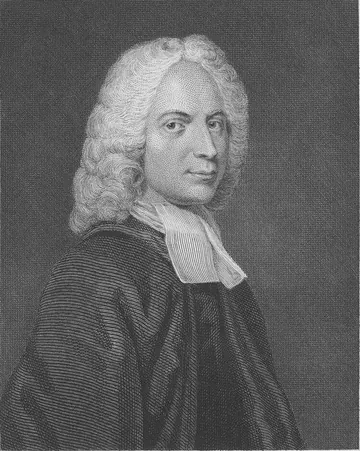
Engraving by R. Newton, 1822
The story behind the hymn
Isaac Watts wrote this hymn as a paraphrase of Psalm 90, a prayer of Moses: “Lord, thou hast been our dwelling place in all generations.” It was published in 1719, in a book of psalms that Watts rewrote in Christian words for English congregations.
The hymn has often been sung in times of national trouble, and one of the most famous was in the dark days of the Second World War.
In August of 1941, Prime Minister Winston Churchill and President Franklin Roosevelt met secretly aboard ships off the coast of Newfoundland. On Sunday, the tenth of August, a church service was held on the deck of the British battleship Prince of Wales, with British and American sailors standing together. Churchill had chosen the hymns himself, and the service closed with “O God, Our Help in Ages Past.”
Churchill later wrote of that service, “Every word seemed to stir the heart.” He called it “a great hour to live.” The old words Watts had written more than two hundred years before still spoke of a God who is “our shelter from the stormy blast, and our eternal home.”